Collaborative Leadership Program
| Event Name: Collaborative Leadership Program | Event Date: 07-09 April, 2025 |
| Faculty Coordinators:Dr. Ripudaman Gaur | Event Timings: 10 AM to 7 PM |
| Number of Participants:80 | Venue:Jim Corbett, Uttarakhand |
Objectives:
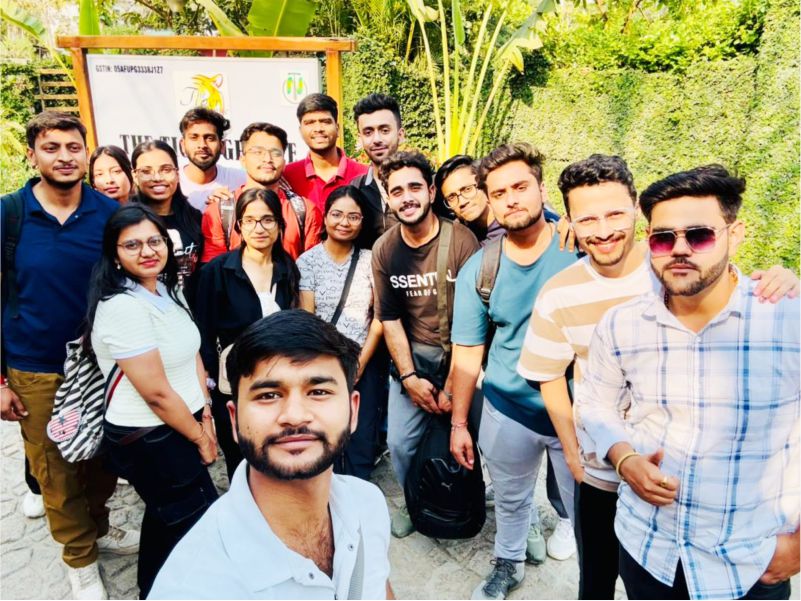
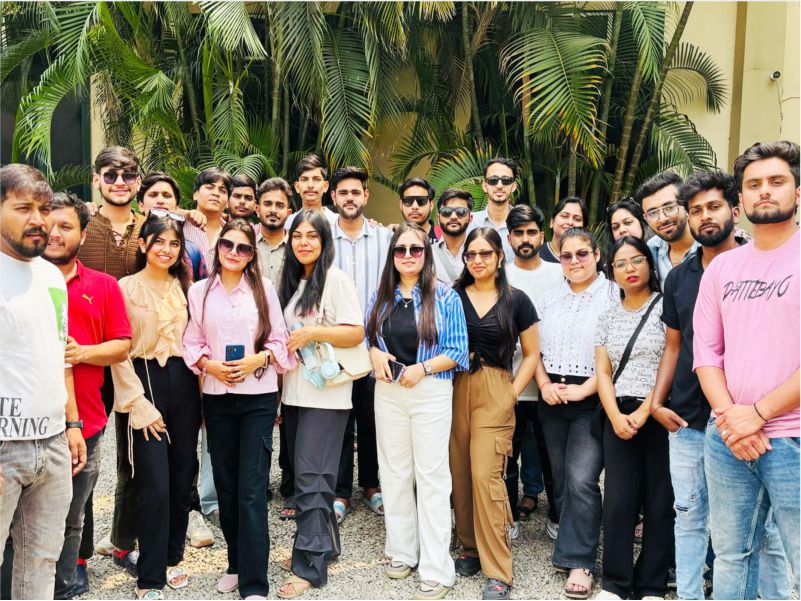
The Collaborative Leadership Program conducted at Jim Corbett National Park for the PGDM Batch 2023–2025 was aimed at nurturing essential leadership and management qualities among students through experiential learning. The program sought to develop collaborative leadership skills by engaging participants in various team-based activities that emphasized problem-solving, decision-making, and adaptability in challenging, real-world environments. It encouraged students to communicate effectively, build coordination and trust within diverse teams, and cultivate self-awareness and emotional intelligence, both vital traits for emerging leaders. Additionally, the initiative provided an opportunity to apply management principles beyond the classroom setting while promoting a sense of environmental responsibility and sustainability consciousness, aligning with holistic leadership development goal.
Detailed Report:
The four-day program was structured with a blend of outdoor activities, group discussions, reflection sessions, and leadership exercises, supervised by professional trainers and faculty mentors.
Day 1 – Arrival and Orientation (06.04.2024)
- Students arrived at the Jim Corbett training site and were briefed about the schedule, objectives, and safety norms.
- The day included an ice-breaking session aimed at building rapport among participants.
- A short orientation on leadership dynamics and the importance of collaboration was conducted by the faculty.
Day 2 – Leadership and Team Building Activities (07.04.2024)
- The day began with trust-building exercises such as blindfold navigation and partner tasks to enhance mutual understanding.
- Students were divided into teams for outdoor challenges like rope course, trekking with limited resources, and river crossing simulations.
- Each activity required strategic planning, division of responsibilities, and collective execution, emphasizing decision-making under pressure.
Day 3 – Problem Solving and Reflection (08.04.2024)
- Focus shifted toward leadership styles and problem-solving.
- Case-based discussions were held on situational leadership and ethical decision-making.
- Teams participated in a leadership simulation game mimicking real corporate challenges, requiring analytical and critical thinking.
- The day ended with a campfire reflection session, where participants shared personal learning experiences and feedback.
Day 4 – Closing and Feedback Session (09.04.2024)
- The final day focused on summarizing the overall learning outcomes.
- Certificates were distributed to participants.
- A feedback session was conducted to evaluate the program’s impact and gather suggestions for improvement.
Learning Outcomes:
The visit to Jim Corbett National Park and the activities conducted during the Collaborative Leadership Program led to significant learning outcomes for the students. Participants gained a deeper understanding of leadership principles and their practical application in real-life situations. Through various team-based challenges, they enhanced their analytical and critical thinking abilities, learning to approach complex problems strategically and collaboratively. The program encouraged innovative problem-solving, requiring teams to design creative solutions to dynamic outdoor scenarios. It also strengthened students’ ability to work effectively in teams, fostering cooperation, trust, and mutual respect among group members. Furthermore, the experience improved both verbal and non-verbal communication skills, as students engaged in active listening, articulation, and constructive feedback. Ethical leadership emerged as a key takeaway, with participants recognizing the importance of integrity, empathy, and responsible decision-making. Exposure to the natural environment deepened their appreciation for ecological balance and sustainability, while self-reflection exercises promoted adaptability and lifelong learning by helping students identify personal strengths and areas for improvement.
Prepared by:
(Dr. Ripudaman Gaur)