Building Foundations in Analytics and Artificial Intelligence
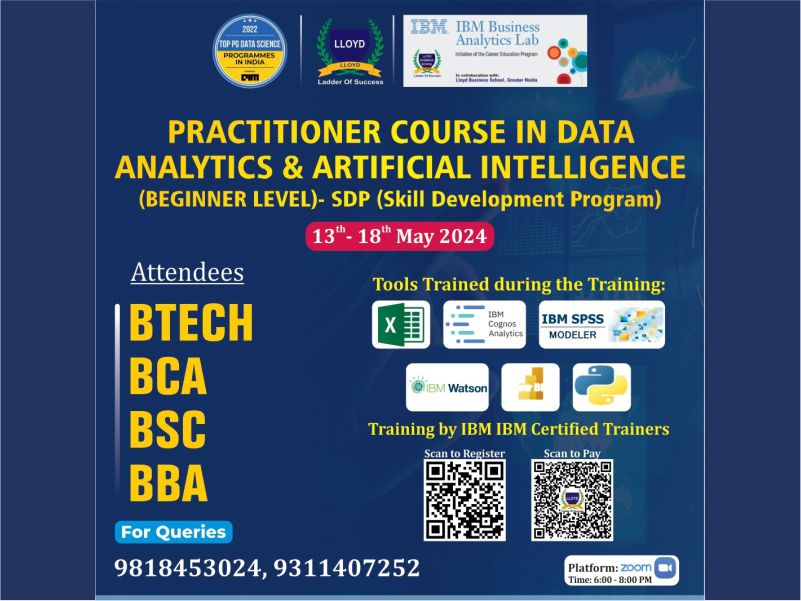
Event Name: Building Foundations in Analytics and Artificial Intelligence
Event Date: May 13th – 18th, 2024
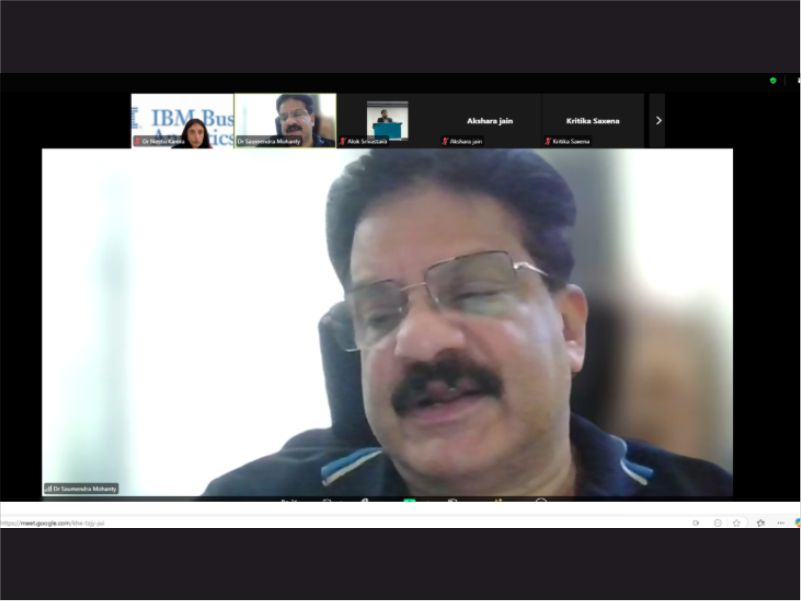
Faculty Coordinators: Dr. Mohanty, Prof.Mohit Agrawal, Prof. Neha Issar, Dr. Neetu Kamra
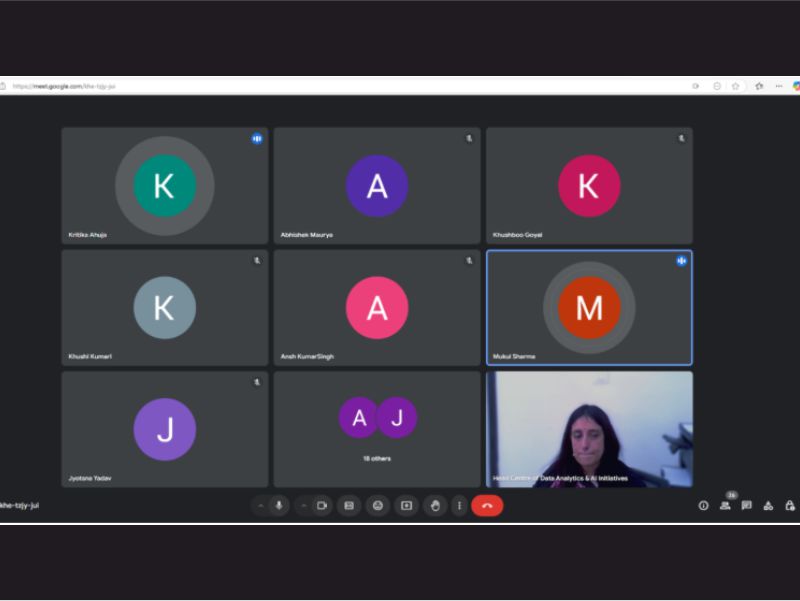
Event Timings: 10 am -3pm Online
Number of Participants: 42
(Corporate professionals and faculty members) in collaboration with JNU
Venue: Lloyd Business School
Objectives:
The primary objective of the Skill Development Program (SDP) on “Building Foundations in Analytics and Artificial Intelligence” was to provide participants with a strong conceptual and practical base in analytics and AI. The program aimed to:
- Introduce fundamental concepts of data analytics and artificial intelligence
- Familiarize participants with basic analytical tools and techniques
- Bridge the gap between theoretical knowledge and real-world applications
- Prepare faculty members and corporate professionals for advanced learning in AI and data-driven decision-making
Detailed Report:
Day 1 – Introduction to Analytics & AI (May 13, 2024)
The first day focused on setting the foundation for the entire program. Participants were introduced to the concept of data analytics, its importance in modern organizations, and the evolution of artificial intelligence. The session explained how data has become a strategic asset and how AI is transforming decision-making across industries. Real-life examples helped participants relate theoretical concepts to practical business scenarios.
Day 2 – Basics of Data Analytics (May 14, 2024)
On the second day, the sessions covered the fundamentals of data analytics, including types of data, data collection methods, and the analytics lifecycle. Participants learned about descriptive, diagnostic, predictive, and prescriptive analytics. Simple case discussions were used to explain how data is cleaned, processed, and interpreted for meaningful insights.
Day 3 – Introduction to Artificial Intelligence Concepts (May 15, 2024)
Day three focused on core AI concepts such as machine learning, automation, and intelligent systems. The trainers explained how AI differs from traditional programming and highlighted its applications in business, education, healthcare, and finance. The session emphasized understanding concepts rather than complex mathematics, making it suitable for beginners.
Day 4 – Tools and Techniques in Analytics (May 16, 2024)
The final day concentrated on applying learned concepts to real-world case studies. Participants worked on integrated exercises combining formulas, pivot tables, automation, and visualization. Interactive discussions and Q&A sessions addressed participant queries. The program concluded with a recap of key concepts and guidance on best practices for using Excel in professional and analytical roles.
Day 5 – AI Applications and Industry Use Cases (May 17, 2024)
The fifth day focused on real-world applications of analytics and AI. Trainers discussed industry use cases such as customer analytics, forecasting, automation, and decision support
systems. The interactive discussions helped participants understand how AI solutions are implemented in organizations and how analytics supports strategic planning.
Day 6 – Summary, Integration & Way Forward (May 18, 2024)
The final day consolidated learning from all previous sessions. Key concepts were revised, and participants were guided on how to continue their learning journey in analytics and AI. The trainers highlighted future trends and career opportunities in the field. The session concluded with participant feedback and reflections on the overall learning experience.
Learning Outcomes:
By the end of the six-day Skill Development Program, participants were able to:
- Understand fundamental concepts of data analytics and artificial intelligence
- Recognize the role of analytics and AI in organizational decision-making
- Gain basic familiarity with analytical tools and techniques
- Develop confidence to explore advanced topics in AI and data science
- Apply conceptual knowledge to real-world business and academic contexts